Professional dryer vent cleaning in Queen Creek, AZ
$99 flat. Roof terminations at no extra charge. Worked from both ends when the run calls for it, and what we take out gets left where you can see it.
Calls answered 7am to 8pm · same-day service usually available
Street address and a date and time that suits you is all we need to get you in the diary.
- Street address, and a date and time that works. That is the whole thing. No questionnaire about your appliance history.
- Price comes on that call. $99 for a standard vent with roof access included. If your setup is genuinely unusual you get told the number then, not once somebody is parked on your driveway.
- Into the diary. Most homes land inside the same week, and same-day is often doable if you ring early enough. Phone is answered 7am to 8pm.
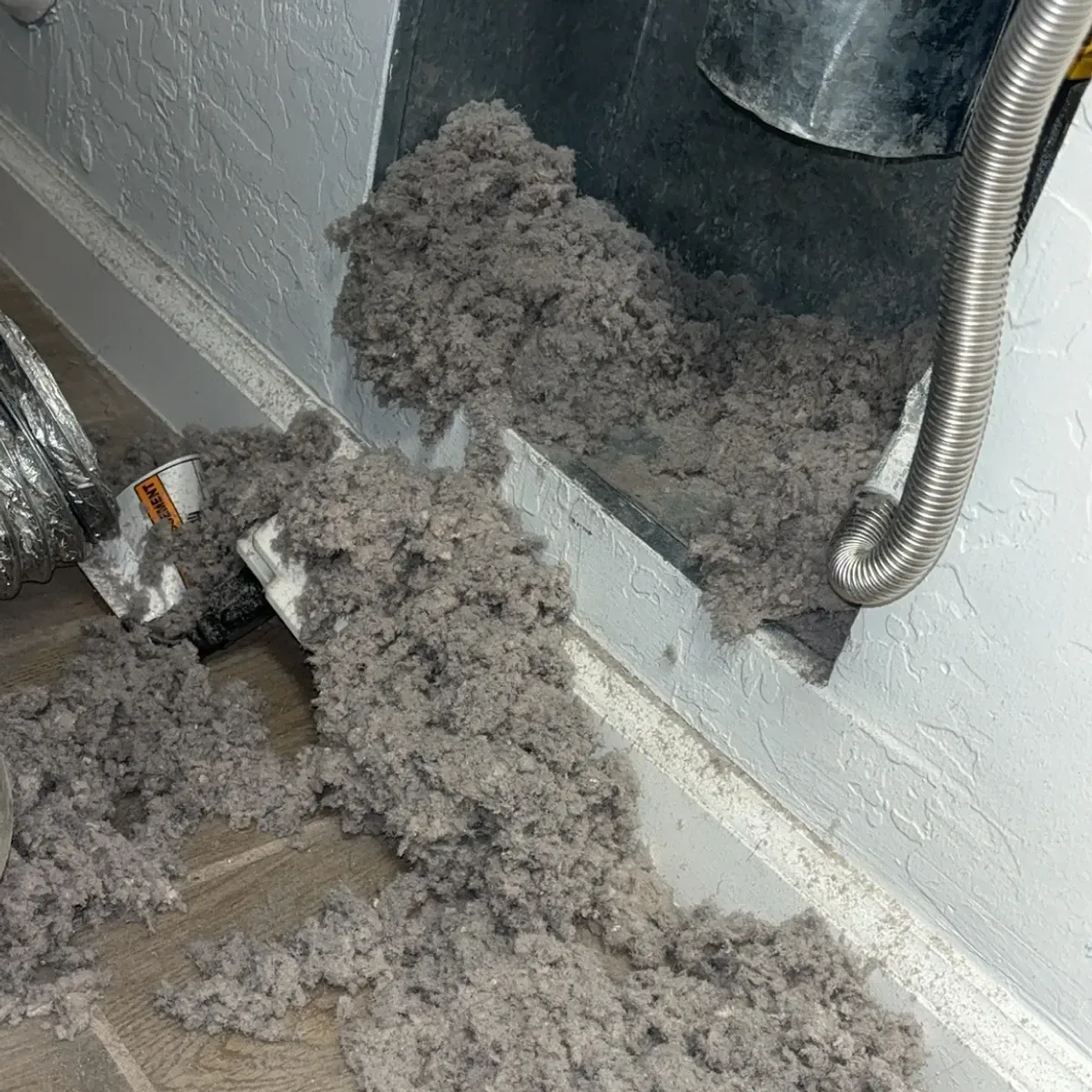
- Then it is ours. We move the appliance, clear the run, put everything back, run it, and leave the pile where you can see it.
Has the dryer put up an error code?
Read this first, because it is the most dependable single indicator you have and hardly anybody mentions it.
A dryer showing a code is the duct roughly 95 percent of the time.
This matters more in Queen Creek than almost anywhere, because the appliances here are new enough to have the monitoring. A current control board watches cycle duration against exhaust temperature, and when restriction drives those two out of line with each other it posts a fault or ends the cycle early. Every brand gives it a different name. What sits underneath it never changes: the exhaust is not leaving the building.
The sequence that usually follows is an appliance technician, a service charge, and confirmation that the machine is in perfect order and the duct is packed. Check the duct before paying anybody to take the back off your dryer.
Older equipment cannot do this. It simply runs hot and takes two cycles until something burns out. In a town where most of the housing went up in the last fifteen years, you have the diagnostic. Use it.
Queen Creek is the youngest housing stock in the Valley, and that changes everything
Most towns we could describe by their old neighborhoods. Here the opposite is true. The overwhelming majority of Queen Creek housing went up in the last twenty years, and a large share of it in the last ten.
That produces a completely different set of problems from anywhere else in the East Valley, and it produces one very common mistake.
The mistake: new house, therefore clean duct
It sounds reasonable and it is frequently wrong. A duct is installed early in a build and then sits open while the house gets finished around it. Drywall dust, sawdust, the odd offcut. Plenty of homes are handed over with that still sitting in the pipe, and nobody has opened it since.
Then there is the hose. Production builders fit corrugated foil because it is cheap and connects in seconds, and the laundry closets in these plans are barely deeper than the appliances. Shutting the bifold doors means pressing the machine back hard, which folds that hose almost flat. Full page on new builds here.
What that means for you
If your house is under about eight years old, the duct in the wall is probably fine and the trouble is in the first three feet. If it is fifteen or twenty years old, which now describes Ocotillo Heights and Cortina, you have an ordinary accumulation problem like anywhere else and it has likely never been touched.
What this particular town does to a dryer vent
Farmland that is still worked
Queen Creek has not stopped being agricultural. When fields get disced or harvested, fine soil goes airborne and travels, settling into the cavity beneath your lint screen and into the duct beyond it. It binds with lint into something denser and considerably more stubborn than lint alone, which is why a blower aimed down the opening often produces no improvement out here.
Continuous construction dust
Large parts of town are still going up. Graded lots, haul roads and unpaved staging areas generate fine dust constantly, and if a phase is being built near you, you are getting it. It settles down markedly once the ground around you is finished and landscaped.
Monsoon is when it surfaces
Humidity climbs through July and August and a machine already labouring against a partial restriction stops coping. Nothing changed in the duct. The restriction had been building since winter. The weather simply removed the margin.
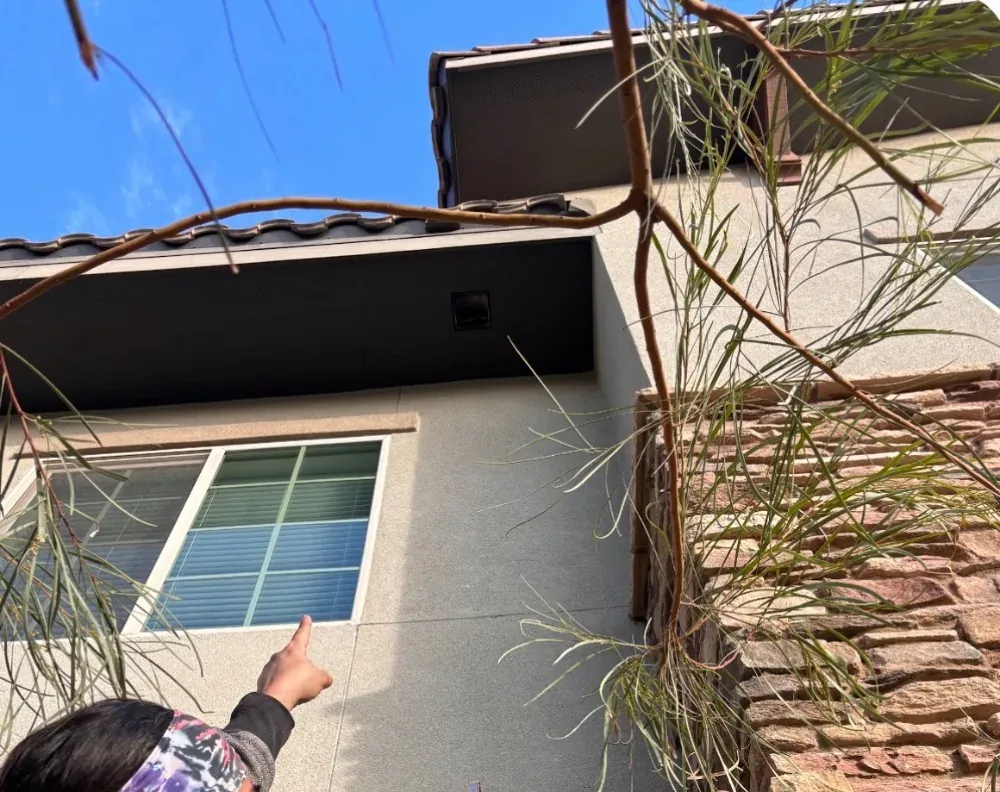
Tile roofs on almost everything two-storey
Concrete tile fractures where weight lands wrong, and a fractured piece becomes water ingress the first time a storm properly delivers. It is also why plenty of companies quote a roof vent and then develop a scheduling problem.
Irrigated acreage
The horse properties and larger lots cycle between flooded and dry, and dry means airborne soil. Add an unpaved drive and there is a continuous fine dust source just outside the house. More on those properties.
What a restricted duct is actually doing
A dryer is better understood as an air mover than a heater. Room air comes in, gets warmed, passes through the drum collecting moisture from the load, and leaves through the vent. Every part of that depends on the last step working.
Restrict the duct and the moisture stays in the drum. That is the symptom you notice. Three worse things sit behind it.
The appliance is wearing itself out
Every dryer carries a thermal fuse meant to cut power before things overheat. A restriction has it intervening routinely while the heating element works well outside its intended range. Machines that fail at six or seven years have very often been finished off by a duct nobody opened.
A fire risk is building
The figures below are published by the National Fire Protection Association, not by us. In their data, failure to clean is the largest single contributing factor in dryer fires and lint is the material most likely to catch first.
Source: National Fire Protection Association, Home Fires Involving Clothes Dryers and Washing Machines.
Moisture is going into the structure
Every load has to discharge its humidity somewhere. Restricted, it backs into the wall cavity, which in time becomes damaged drywall and mould.
Signs it needs doing
- The dryer has put up an error code, which points at the duct roughly 95 percent of the time
- Clothes come out warm but still damp at the end of a full cycle
- Two cycles have quietly become normal for one ordinary load
- The laundry room gets noticeably hot while the machine runs
- A burning smell, or a musty one, during a cycle
- The screen is catching noticeably less than it did
- The machine shuts itself down partway through
- The flap outside barely moves, or does not open at all
- It has been over ten months, or nobody has ever done it
How we do it
- Establish the route. We follow where the duct actually goes, look at the cap or roof hood, and check the flexible length behind the appliance. On the newer builds out here the fault is very often in that flexible length rather than anywhere in the wall.
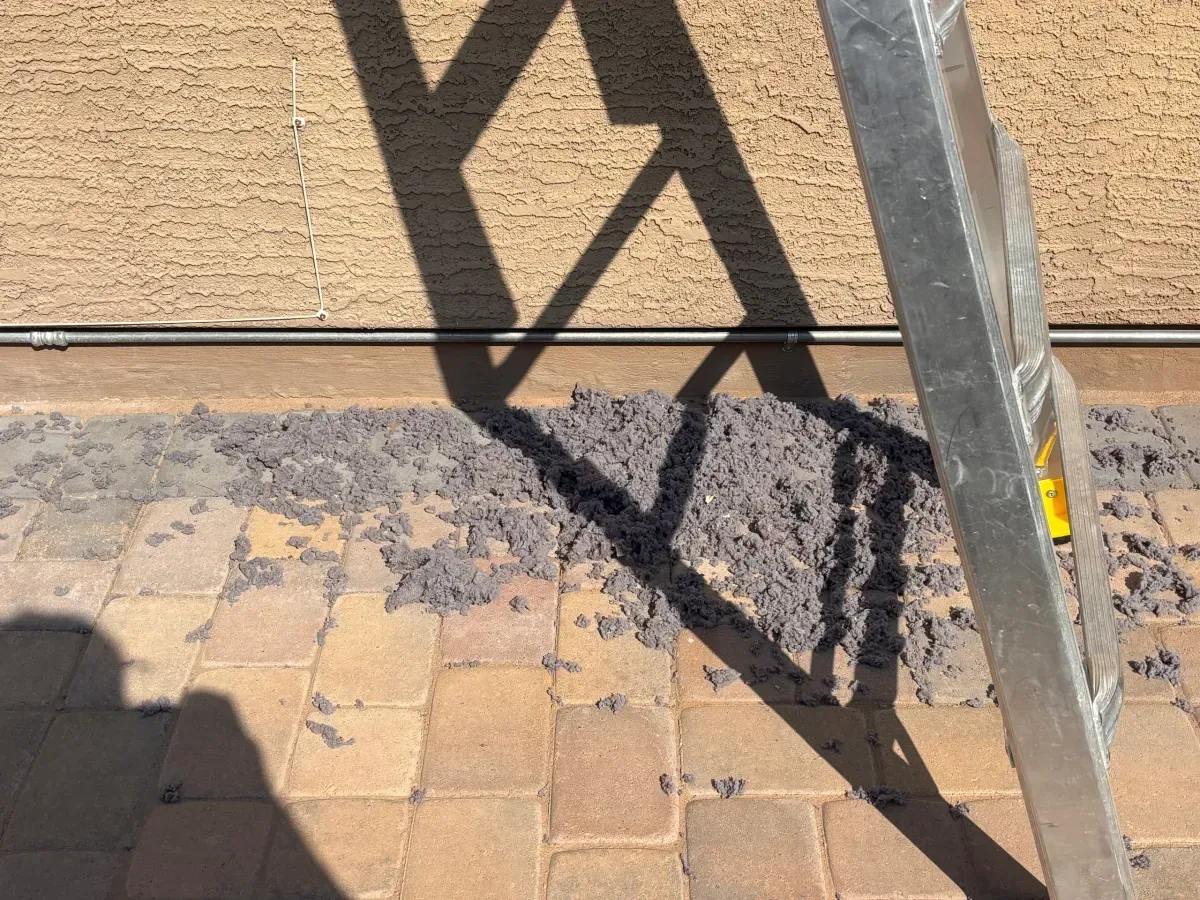
- Outside, with the machine running. The dryer stays powered the whole time we are at the termination so its own exhaust pushes what we loosen out and away, instead of allowing it to drift back into the run. Lint goes everywhere outside. Tidying that is part of the job, not an extra.
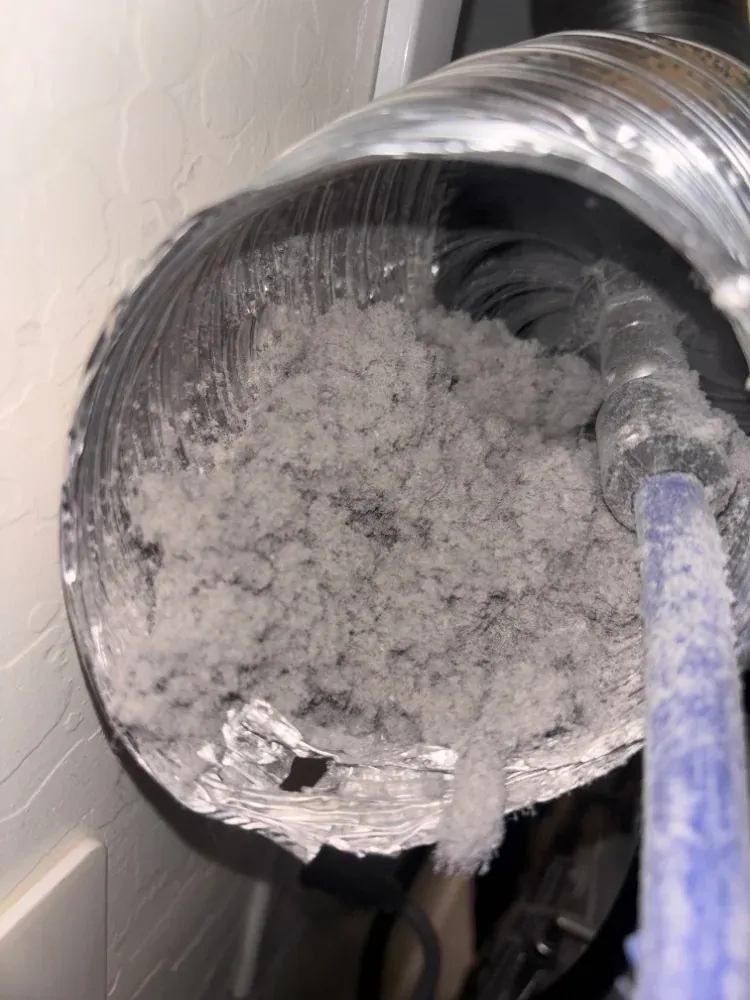
- Then from the inside. Power off, hose uncoupled, appliance pulled away from the wall. Brush into the vent from that end, material drawn back toward us and taken out with a vacuum rather than left to resettle.
- Two ends where the run justifies it. Long routes with several bends get worked from both directions, since a brush entering one side never reaches the far half properly. Short straight runs do not need it and we will tell you so.
- Reassembled, run, and shown to you. The appliance goes back where it belongs and gets started, and what we took out is left in front of you.
How often it needs doing
Ten months in an ordinary household. Put it in the calendar the way you would a filter change.
- Every 10 months for a typical Queen Creek home
- Every 4 to 6 months with a full house doing laundry most days, or where farm and construction dust is heavy
- Monthly on commercial machines
Most people out here treat a slow dryer as the moment to make the call. By that stage you are not coming up on the interval, you cleared it about a year ago. Slow drying is what eventually surfaces after months of restriction have already been going to work on the appliance.
And if your reasoning is that the house is new so the duct must be fine, that is worth reading about. New does not mean empty.
What it costs
| Service | Price | What it is |
|---|---|---|
| Standard dryer vent clean | $99 | Full run, brushed from both ends where the route calls for it. Roof or side wall, any storey. |
| Lint screen cavity clean | +$98 | Optional, and the one we make the case for. |
| Hose upgrade | +$98 | Optional. Builder foil out, rigid transition duct in. |
The extra we argue for. Beneath your removable lint screen sits a chamber that nothing empties and most owners have never had opened. We have taken machines apart where it had never been cleared once, and repairing what running that hot had done came to more than the dryer was worth replacing. Worth reading before you skip it.
Where we work
Ocotillo Heights · Cortina · Hastings Farms · Barney Farms · Harvest · Sossaman Estates · Church Farm · Whitewing · The Pecans · Encanterra · Ironwood Crossing · Legado · Charleston Estates · Queen Creek Station · Emperor Estates · Queenland Manor · Meridian · The Orchards · Vineyard · Cambria
Ocotillo Heights and Cortina · Harvest and Barney Farms · Encanterra · Hastings Farms and the horse properties · Church Farm, Whitewing and The Pecans · Sossaman Estates and Queen Creek Station
Common questions
What does dryer vent cleaning cost in Queen Creek?
$99 flat for a standard vent with roof terminations included. Two optional extras at $98 each: clearing the cavity beneath your lint screen, and replacing builder-grade foil hose with rigid transition duct. Most people take the $99 alone.
My house is nearly new. Do I need this?
More often than people expect. Two things catch new homes here. The foil hose behind the appliance gets folded flat when the machine is pushed back to shut the closet doors, and ducts are fitted early in a build then left open while the house is finished around them, so construction debris is sometimes still in the pipe at handover.
Is roof access really included?
It is. Most two-storey homes here terminate through the roof, so billing separately for that would mean surcharging a large share of the town over how their house was built.
Which areas do you cover?
Queen Creek only. 85142, 85140 and 85143. No call-out fee and no pricing by zone.
How often should it be done?
Ten months in an ordinary household, four to six where the house is full or dust exposure is heavy, monthly on commercial machines. Waiting until the dryer goes slow means you are already about a year past due.
Does the farmland actually matter?
It does. When fields nearby get disced or harvested, fine soil goes airborne and settles into the screen cavity and the duct, where it binds with lint into something denser and harder to shift than lint alone. Active construction does the same thing.
Card accepted?
Yes, and a receipt by email or text.
Calls answered 7am to 8pm · same-day service usually available
$99 flat with roof access included. Phone answered 7am to 8pm.